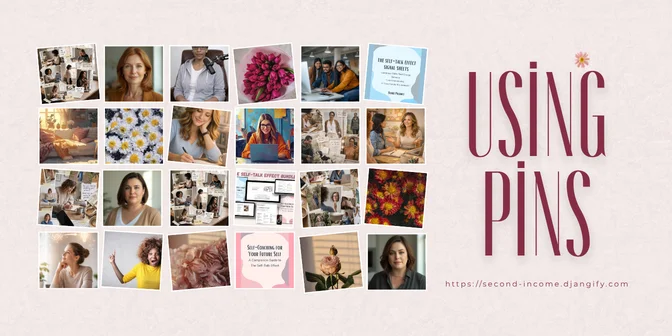
If you have ever started out strong with posting online and then gradually faded into a long stretch of silence, you will know exactly what I am talking about. I have done that cycle more times than I care to admit. A burst of motivation, a few posts, some early engagement, and then the slow creep of resistance until eventually I just stopped showing up altogether.
For a long time I thought the problem was discipline. That I simply needed to be more consistent, more committed, more willing to push through the discomfort of being visible online. But what I eventually realised was that the problem was never discipline. It was friction. The process of creating content had too many steps, too many decisions, and too much pressure attached to it for me to maintain it alongside everything else in my life.
What changed things for me was discovering faceless content, and once I understood what it actually meant in practice, everything became a lot lighter.
What Faceless Content Actually Means
When I first came across the term, I imagined it meant cold, anonymous content with no warmth or personality behind it. That is not what I found at all. Faceless content simply means content that does not require you to be on camera, to style yourself, to record your voice, or to perform in any way. It removes the parts of content creation that create the most resistance, while still allowing you to share ideas, build an audience, and guide people toward what you are selling.
For me, the personality still comes through in the message. What disappears is the pressure to look a certain way or to show up as a polished version of myself before I can hit publish. That shift alone made it possible for me to create content far more consistently than I ever had before.
The goal with faceless content is not to hide. It is to simplify, so that the actual act of creating and publishing becomes something you can do without a great deal of preparation or overthinking.
The Formats I Actually Use
Over time I have narrowed things down to a small number of formats that I can produce quickly and without stress. I am not trying to do everything; I am trying to do a few things well enough and often enough that they build up over time.
Text overlays are probably what I use most. This is simply taking one clear, focused thought and placing it over a simple or visually calm background. It sounds basic, and it is, but it works because the message is doing all the heavy lifting. There is nothing competing for attention. The idea has space to land, and that simplicity tends to travel well.
I also use short clips and simple image sequences, usually to set a mood or reflect the theme of what I am writing about rather than to explain anything visually. These do not need to be high quality in the traditional sense. They need to feel consistent with the message and the overall tone of what I am building.
What they all have in common is that each piece communicates one thing clearly. I stopped trying to say everything in a single post and started giving individual ideas their own space. That made each piece of content easier to create and easier for people to engage with quickly.
Why Showing Up Regularly Matters More Than Being Perfect
This was probably the hardest lesson for me to absorb, because I was conditioned to believe that if something was not polished it was not worth posting. What I have learned from actually doing this is that a steady stream of simple, clear content consistently outperforms occasional, highly produced content.
When I was obsessing over making things look perfect, I was posting once in a while at best. The gaps between posts meant that momentum kept stalling and I was essentially starting over every time. By contrast, when I gave myself permission to post something simpler and post it more often, the visibility of my products improved in a way that felt gradual but real.
My understanding of quality has genuinely shifted. It is no longer about how something looks. It is about whether the message connects with the person who sees it. Clarity, relevance, and honesty will take you much further than a perfectly edited video that took two days to produce.
Using Content to Figure Out What Actually Resonates
One of the unexpected benefits of creating faceless content regularly is that it has become a low-stakes way to test ideas. Because each piece is quick to put together, I can try different angles and different ways of describing what my products do, and then watch how people respond.
Some messages land immediately. Others pass by without much reaction. Rather than seeing that as failure, I now treat it as useful information. It tells me which ideas are worth developing and which ones need rethinking. Over time, this has helped me sharpen the language I use on my product pages too, because I am not guessing what might work. I am basing it on what I have already seen people respond to.
How It All Connects Back to the Store
The point of all of this content is not visibility for its own sake. Each piece is designed to act as a small doorway that guides someone toward a product. That connection needs to be intentional, which means I always have a clear destination in mind when I create something.
My store is set up so that I can link directly from content to specific product pages, which makes the journey simple for someone who arrives curious and wants to take the next step. I have also worked on making sure the language in my content matches the language on my product pages, so that nothing feels jarring or disconnected when someone crosses from one to the other. That alignment might seem like a small detail, but it makes a noticeable difference to whether someone follows through or drifts away.
What Has Actually Changed
Looking back at where I started, the biggest shift has not been in any single piece of content I have created. It has been in the fact that I am still here, still creating, still building, in a way that does not leave me exhausted or resentful.
Removing the friction from the process meant that consistency stopped being something I had to force and became something that happened naturally as part of a routine I could actually manage. The content I create now keeps working after I have moved on to other things. It sits in the background, quietly directing people toward what I offer, without needing me to be constantly present and switched on to keep it running.
For anyone building a second income or side hustle around digital products, that kind of steady, reliable presence is worth far more in the long run than occasional bursts of high-effort content that are impossible to sustain. It took me longer than it should have to understand that. But now that I do, it has made this whole journey feel a great deal more possible.