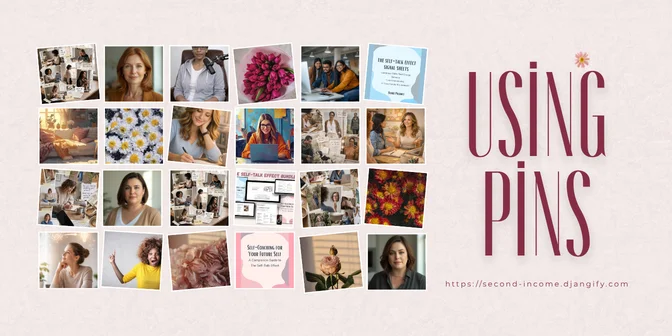
I will be honest with you. Pinterest was not even on my radar when I first started building my second income business around digital products. I had written it off completely, assuming it was the kind of platform people used to collect recipes, plan weddings, and save pictures of rooms they would never actually redecorate. It didn't feel like a place where real business happened, and so I simply never considered it.
What made me look again was coming across the idea that Pinterest is not really a social media platform at all. It is a search engine. And once that framing landed, I could not unsee it. People are not scrolling Pinterest the way they scroll Instagram or TikTok, waiting to be entertained. They are searching for something. They are typing in questions and ideas and problems, and they are looking for content that helps them move forward. That is a completely different kind of attention, and it is exactly the kind of attention I want pointing toward my store.
So I decided to give it a proper go, and here is where I am with it so far.
Why I Think Pinterest Is Worth Taking Seriously
The thing that appeals to me most about Pinterest, especially at this stage of building my side hustle second income, is that it does not demand constant presence the way other platforms do. Once a pin is published and indexed, it can continue to appear in search results for months. I have read accounts from people who say pins they created over a year ago are still sending them traffic today. That kind of long-term return on a single piece of content is exactly what I am looking for.
Most platforms punish you for stepping away even briefly. Pinterest seems to work the opposite way. The content accumulates over time, and each new pin adds to a growing pool of entry points rather than replacing what came before. For someone building a second income alongside a full life, that feels far more sustainable than chasing daily engagement somewhere else.
How I Am Approaching It
I am still early in this, so I am not going to pretend I have it all figured out. What I have done is start with the same principle I use for my blog content, which is to think about what someone is actually searching for rather than what I feel like creating.
Each pin I make is centred around one clear idea, something simple and specific that matches the kind of thing a person might type when they are trying to solve a problem or find an answer. I keep the visuals clean and uncluttered, because from what I have learned, people are moving fast and making quick decisions about what to stop and look at. If the message is not clear within the first second, the moment is gone.
I have also been paying attention to the wording I use on each pin, because small changes in how something is phrased can make a real difference to whether it appears in the right searches. This is something I am still learning, but even at this stage it has made me think more carefully about language in a way that feeds back into how I write my product descriptions and blog posts too.
Where I Am Sending People
One thing I decided early on was to link most of my pins to blog posts and my email capture page rather than directly to product pages. The reasoning behind this is that someone arriving from Pinterest is usually in a browsing and exploring mindset. They are curious but not necessarily ready to buy. A blog post gives me the chance to meet them where they are, provide something genuinely useful, and then naturally introduce a product once there is already some context and trust in place.
When the link goes straight to a product page without any warm-up, the gap between where they are and where I want them to go feels too wide. The blog acts as a bridge, and so far that approach feels right to me.
What I Am Hoping to Build Over Time
Right now I am in the phase of planting seeds, creating pins consistently and learning what seems to connect with people and what does not. I am not expecting dramatic results overnight, and I think that is actually the right mindset for Pinterest. It is not a platform that rewards impatience. It rewards consistency and it rewards content that genuinely matches what people are searching for.
What I am building toward is a steady stream of traffic that arrives already interested, already curious, and already aligned with what my store offers. Not a flood of random visitors, but a reliable trickle of the right people finding their way in through multiple small entry points, each one a pin that led to a post that led to a product.
I am genuinely excited about where this could go. I will report back as things develop, but for now Pinterest has moved from something I completely dismissed to something I am actively investing time in, and that shift alone feels like progress.
If you're interested in starting a side hustle or building a second income using affiliat marketing or faceless marketing join this free group to discover more.